Created: 23 Sep 2022 ; Updated: 23 Jul 2025
Note: I excerpted portions of this post for an article on FORVM’s Numiswiki (14 Jan 2023). Incidentally, Numiswiki is a great ancient coin information resource (also mentioned on my Annotated Resources page).
See also: Complete “Provenance Glossary.”
Some coins and a book by the important British numismatist, Rev. Richard J. Plant (1928-2020), well known for his books on Greek, Roman, and Arabic coins.
Jump straight to the Plant Biography / Bibliography
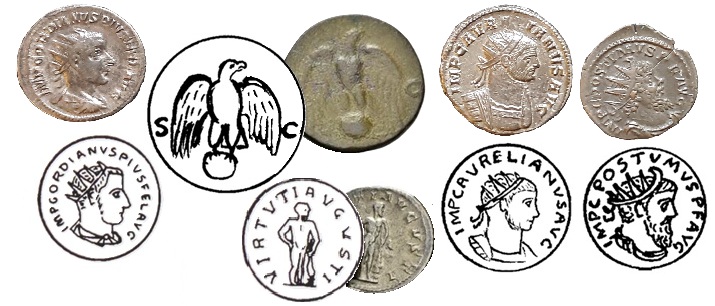
Plant was particularly known for using his own line drawings in books, rather than photographic plates. They have a singular quality: Though Plant lacked traditional talent for realistic drawings (or perhaps because of it), readers were charmed by his illustrations. The drawings did their technical job. Much more importantly, they personalized Plant’s work, allowing us to see the hand of the author, including its flaws and limits.
Plant often illustrated coins from his own collection, combining “realistic” and “idealized” renderings of coin models. The Samarian bronze of Domitian shown below was the model for Type 1881 in his 1979 book on Greek Coin Types and Their Identification (pp. 106 and 262).
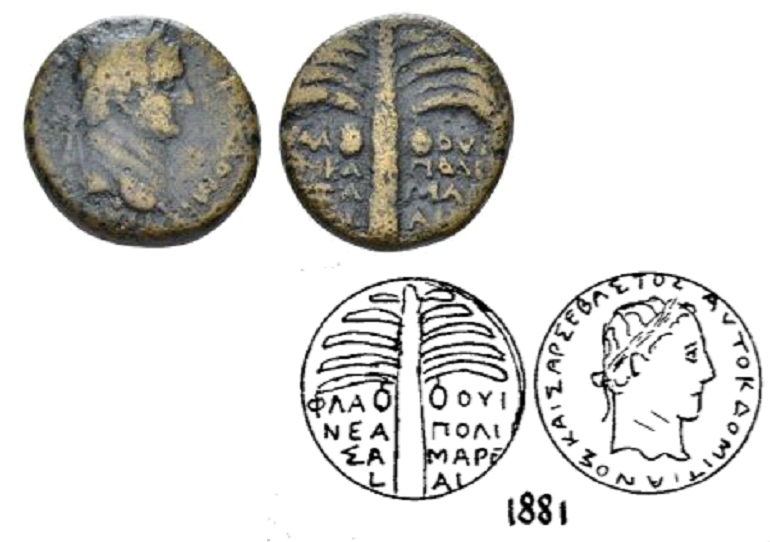
Roman Judaea, Samaria, Neapolis, Domitian AE20 (Assarion or Dupondius?) (20mm, 7.11g, 6h), dated Year 11 (L-AI), 82-83 CE.
Obverse: ΑΥΤΟΚ ΔΟΜΙΤΙΑΝΟΣ ΚΑΙΣΑΡ ΣΕΒΑΣΤΟΣ. Laureate head of Domitian.
Reverse: ΦΛΑΟΥΙ ΝΕΑΠΟΛΙ ΣΑΜΑ L – ΑΙ. Palm tree.
References: RPC 2220; Plant 1881 (this rev. illustrated?).
Provenance: Ex Collection of Rev. Richard J Plant (1928-2020); Naville 64 (2021), 235.
Plant cleaned up the legends and centering a bit, but otherwise rendered the reverse with particular fidelity, even representing the faint edge flaw with a line running 12h-3h! (His book organized Greek and Provincial coins according to the their reverse types, this one in the “Palm Tree” plate.) The obverse is more heavily idealized, emphasizing the complete legend, which was never fully struck on actual specimens of the type.
When Plant didn’t own a specimen, he usually found photographic models in Leonard Forrer’s catalog of the Hermann Weber Collection. Weber’s Hidrieus Tetradrachm, shown below (and on my Greek East Page) was probably the model for Plant 413-C.
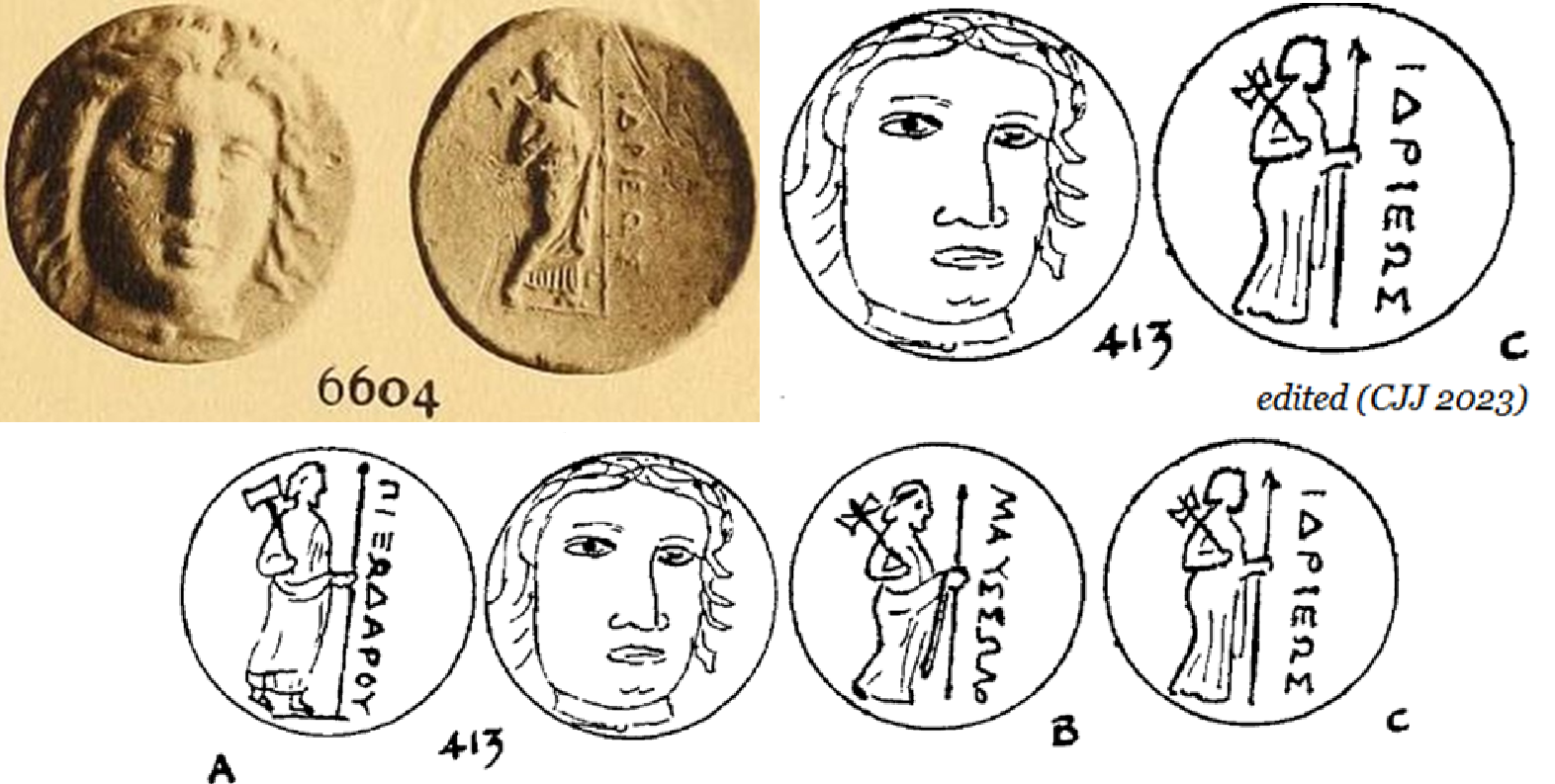
NOT FROM PLANT’S COLLECTION: Caria, Satraps. Hidrieus AR Tetradrachm, 351-344 BCE. Illustrated by Plant (1979: “Poseidon and Zeus” plate, 413), after Weber 6604. (See also the the Faustina II from Nysa on my RPC Page, which Plant may have used for his illustration no. 1952.)
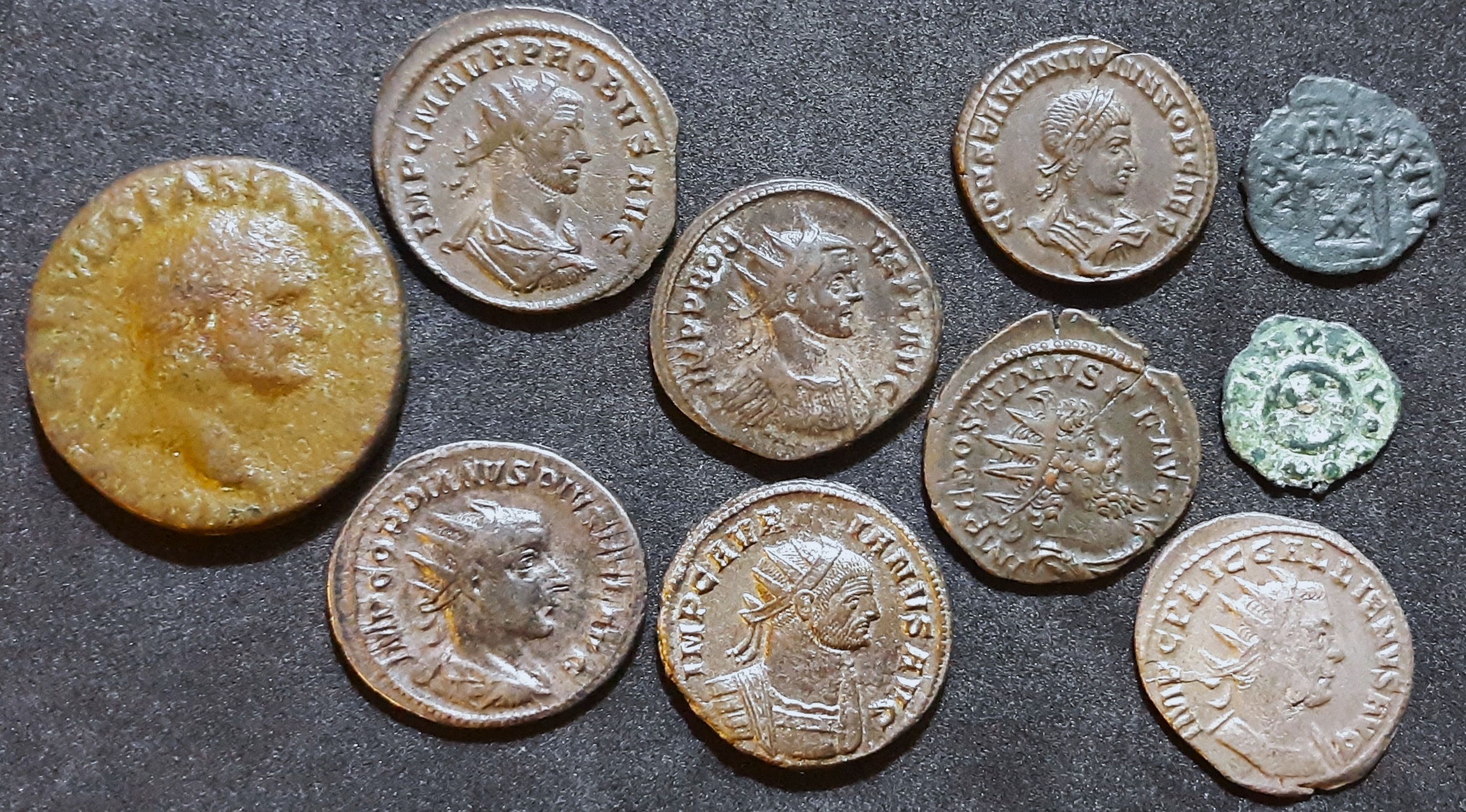
Individual specimens of the Roman Imperial Coins are, by their nature, harder to match to Plant’s drawings (i.e., those in his 2000 Roman Base Metal Coins and 2005 Roman Silver Coins). Nonetheless, imagining which of his coins could have served as models for his drawings is my favorite way to appreciate his collection and books:
Richard J Plant Biography & Bibliography:
Rev. Richard J Plant (1928-2020) – once dubbed “the Reverend of Numismatics” by The Celator (see issues linked below) – was a Methodist Minister in the UK and well-known author on classical numismatics. He began collecting ancient coins shortly after being stationed in Tripoli after WWII, c. 1948.
He died in 2020 and his collection was dispersed beginning in 2021 by two London-based coin firms, Dix Noonan Webb and Naville Numismatics. The DNW website catalogs much of the collection, along with an extended biographical foreword by his son (199 Lots sold at DNW 188, the 2021 Feb 9 Auction [Special Collection 991], though the Islamic/Medieval coins are cataloged separately).
(See also the Numismatic Bibliomania Society’s E-Sylum Vol 23 – No 36 – Article 8 [2020 Sep 6] for the obituary/biographical essay.)
Books by Richard J Plant:
In addition to his hand drawn illustrations, Plant’s books are known for a focus on linguistic understanding.
Arabic Coins and How to Read Them (1973).
Greek, Semitic Asiatic Coins and How to Read Them (1979 [2013, “revised & augmented”]; “his magnum opus”; the 1979 edition was only printed in 100 copies; NBS E-Sylum review).
Greek Coin Types and Their Identification (1979, Seaby).
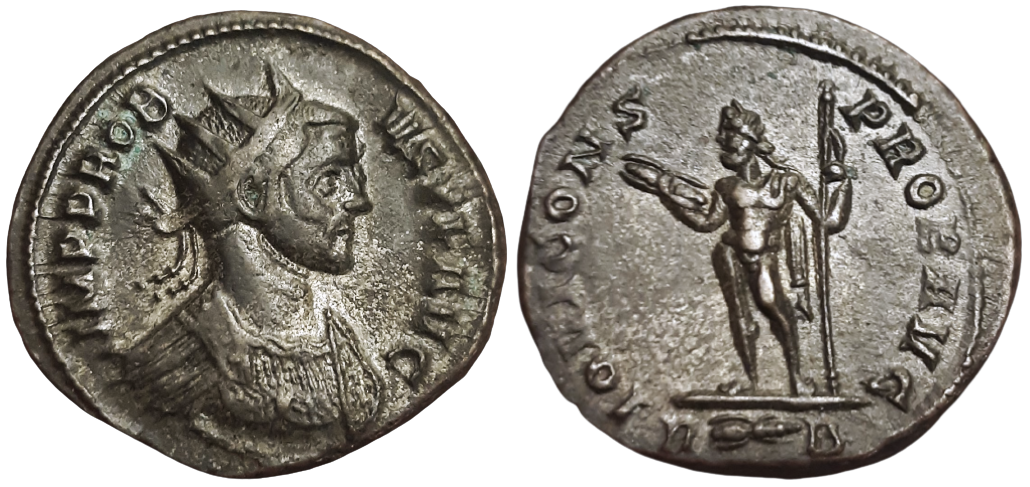
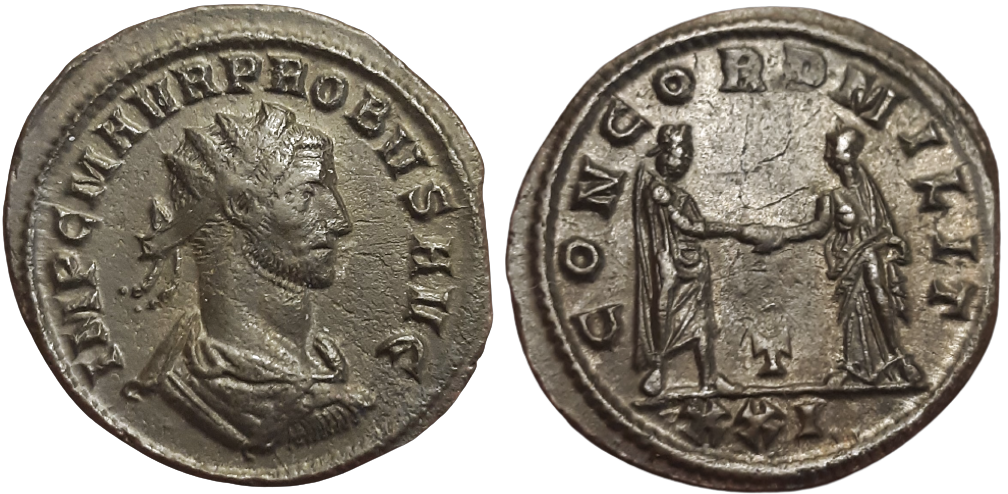
Roman Base Metal Coins (2000).
Roman Silver Coins (2005).
A Numismatic Journey Through the Bible (2007; foreword by David Hendin; RJP’s “last substantial book”).
Some articles in The Celator:
The Celator Vol 24, No 3 (2010 March), “Meet the Reverend of Numismatics: Conversations with Richard Plant,“ by Mark Fox (pp. 20, 22, 24, 26, 28, 30, 34-37, 56; .pdf extract saved). [He was stationed in Tripoli during the aftermath of the war, ca. 1946-1948? and discusses how that shaped his collecting.] See also the warm reader comments in the subsequent issue, The Celator Vol 24, No 4 (2010 April): pp. 4 & 40.
The Celator Vol 22, No 1 (2008 January), “A Numismatic Lexicon” by Richard Plant (pp. 28-29, illustrated with 5 of Plant’s line drawings).
Below, my copy of the book from which the illustration comes (see below for why I included a photo of the previous owner’s scribblings):
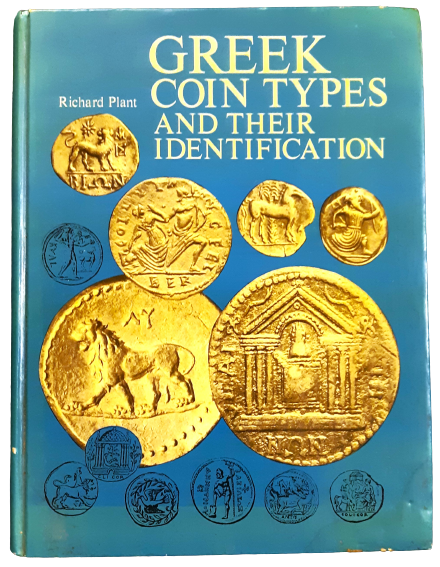
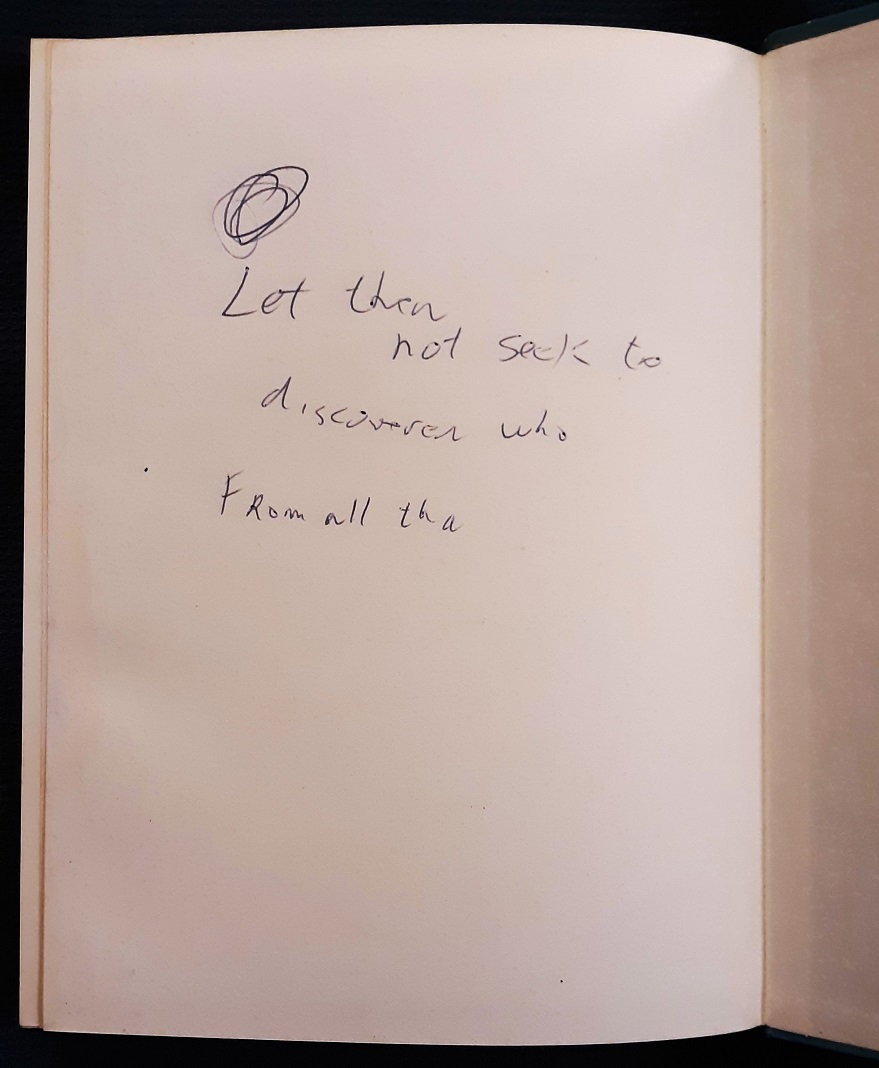
Plant, Richard J. 1979. Greek Coin Types and Their Identification. London: Seaby. [Clain-Stefanelli 1859 & 3492; Daehn 1033; Kroh pp. 8 & 66 (3 Stars).] Ex-library of Ray Dobbins (1947-2021), his inscription on endpaper.
Brief Aside: Dobbins & Cavafy.
As it happens, the book itself also has a notable provenance. It comes from the library of Ray Dobbins (1947-2021, AKA Jim Flannigan, East Village NYC), well-known author/playwright in gay literature (and videographer, activist, and songwriter for Jazz Passengers et al.). A 2018 interview with him about Stonewall is available from the NYU oral history project, “The Digital Downtown”.
On the rear free endpaper he inscribed a passage from “Hidden Things” by the Greek poet Constantine P. Cavafy (1863-1933, Alexandria, Egypt) [his wiki page]: “Let them not seek to discover who [I was] from all tha[t I have done and said].” (I wonder why he stopped mid-word!) Ray Dobbins wrote a biographical play about him, Read my Hips, performed in 2005 at Drill Hall (London) with Bette Bourne (1939-2024 [wiki bio]) playing Cavafy. (Dobbins and Bourne collaborated on multiple productions in NY and London, c. 1990-2005.)
In an interesting coincidence relating to another “provenance sub-collection” of mine, the collector BCD is related to Cavafy (cousin of his grandmother), and an “avid reader” of his poetry (Felch 2015: 2).
Review of the Collection:
Browsing Richard Plant’s collection, or reading about his collecting habits and budget, many collectors will find it quite approachable and to have a familiar quality.
There are many desirable types, but rarely in the highest states of preservation: RRC and Imperatorial denarii, dozens of large denomination Greek AR, even a few AV Staters. Instead, the best coins tend to be “only” attractive enough, with nice eye appeal or old collection toning.
One gets the sense of a collection built with decades of patience and scholarly interest, the many common, affordable types acquired through steady involvement in the hobby, and the few higher-quality prizes chosen with studied deliberation. Compared to most collections, duplication is notably infrequent among his better coins.
From the Greek, especially, one can read a purpose: a desire to find, within the limits of a reasonable budget, a modest number of lovely examples that nonetheless do justice to the great artistic, geographic, historical, and, of course, linguistic expanse of Classical and Hellenistic types. He included a special emphasis on the Macedonians and successor kingdoms, but touching upon, in only dozens of coins, Sicily, Magna Graecia, and Northern and Central Greece and the Peloponnese.
There are large piles of hefty early Imperial bronzes, and varied groups of respectable Republican and Imperatorial denarii, including popular types such as Odysseus-and-Argos, the equestrian reverses of Crepusius and Marcius Philippus, and at least a pair of Julius Caesar.
Looking at this collection as a whole, it is easy to recognize one’s own collection in the RIC bronzes and billon and denarii with “honest wear,” but very difficult not to feel a pang of regret when looking over the better coins, and think to oneself: “If only I were a bit more patient and deliberative, perhaps studied a bit more, even on my budget, that’s what my collection could look like!” Then again, no reason one cannot follow that example moving forward.